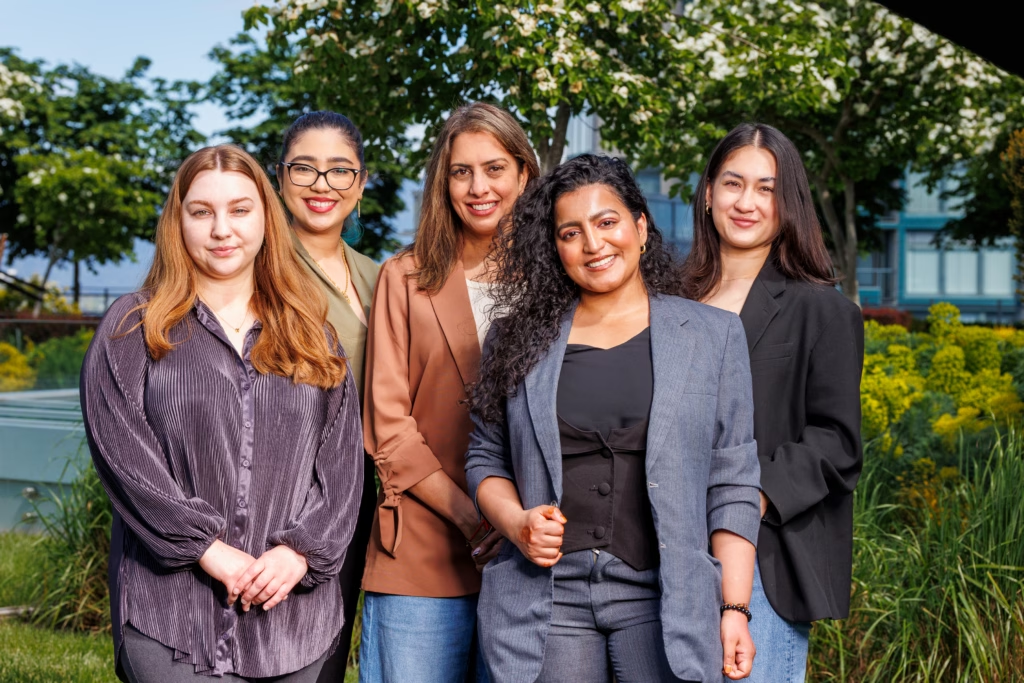
Legal clinics are a lifeline for those without the means to afford a lawyer. Because legal clinics have lawyers on staff, they’re able to assist clients with more complex or challenging cases, all at no cost to the client.
The two small legal clinics serving Kamloops and Kelowna brought free legal representation to the region in 2019. In 2024, with a boost in funding from the Law Foundation of BC, they combined and expanded into the Okanagan Thompson Legal Clinic with two branches in Kamloops and Kelowna. These are two of 11 legal clinics that the Foundation funds with the province.
In addition to the services provided by lawyers, the Okanagan Thompson Legal Clinic has community legal advocates who support clients with a wide range of issues, such as income assistance, provincial disability benefits, federal income security programs, employment insurance benefits, debt, and residential tenancy issues.
Advocates assist clients with completing documentation and forms and preparing written appeals. They also support clients at negotiation and mediation sessions, as well as legal representation at tribunal hearings and arbitrations. Specialized family law advocates assist with protection orders, parenting arrangements, child support, spousal support, limited property and debt issues, and child protection information and guidance.
Regional clinics understand regional issues
Individuals living in rural communities often face unique barriers to accessing legal services, including poor internet speeds and coverage, and fewer local services. Residents may need to drive one to two hours from their community to access services, and public transit options are extremely limited.
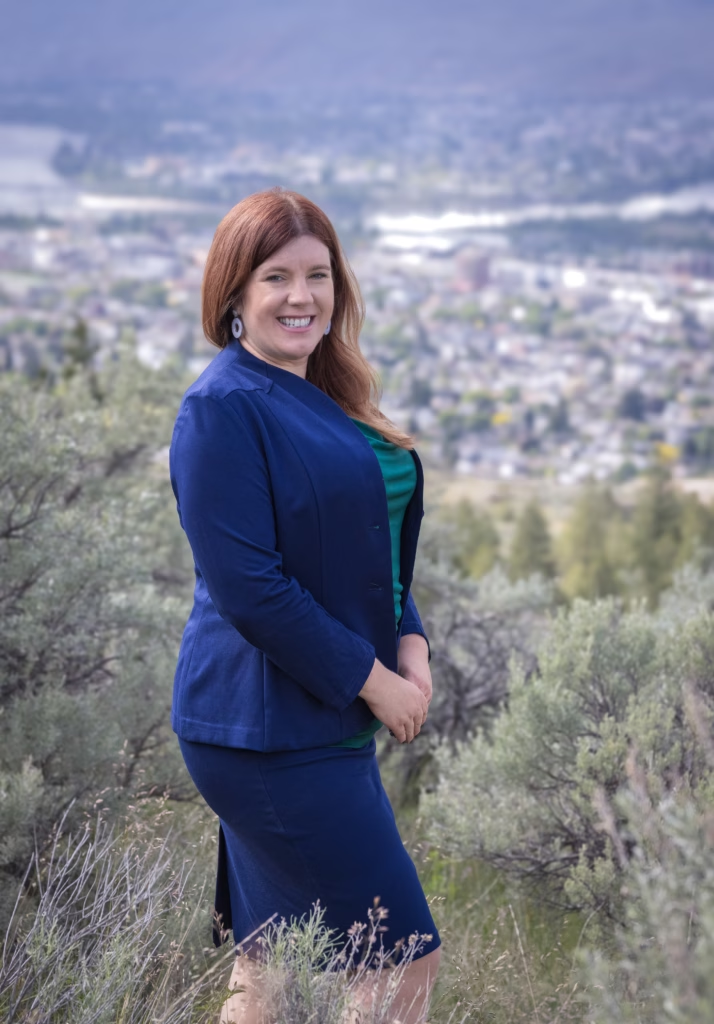
Photo by Bonnie Price
To address these barriers, Odette Dempsey-Caputo, the clinic’s executive director, is partnering with regional nonprofits that can act as satellite locations for advocacy services. Clients can get help in Merritt or Salmon Arm with tasks like scanning and uploading documents.
“In-person services are very important. There’s a lot of trust barriers with our clients. And it might be something as simple as having a brain injury and being unable to be on a computer,” Dempsey-Caputo explains.
There are some perks to working in a small community. Dempsey-Caputo’s team often ends up seeing familiar faces on the other side of the cases they work on, such as a landlord who has repeatedly applied for evictions that turn out to be in bad faith. This can result in better and more amicable settlements, because there’s the opportunity to develop a relationship.
More legal clinics needed in the Okanagan
Partnerships and collaborations are at the heart of the clinic’s outreach strategy. Advocates at the clinic offer free legal education at local libraries to reach a broad audience. And Dempsey-Caputo takes special care to build relationships with harder-to-reach groups by partnering with non-profits that work with those populations, such as the Migrant Workers Centre.
The clinic’s two locations help more than 400 clients a year, with a three-week waitlist at any given time.
Dempsey-Caputo estimates that even if they had the resources to triple their caseload capacity, there’d still be no shortage of need in the community. She hopes that more legal clinics will open up soon in the region. “We’re so willing to help out and share our information,” she says.
Across BC, many continue to face significant barriers to accessing legal representation, especially those outside of major cities. The Foundation continues to support the expansion of the Okanagan-Thompson Legal Clinic, providing more than 1.4 million in support annually.